
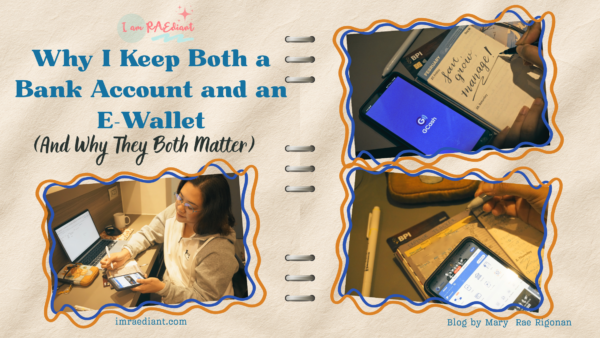
My Weekly Money Date with My Journal
Adulting has taught me one thing: managing money isn’t just about earning it but also, it’s about knowing where to put it. One habit I’ve quietly built in my 30s is having a weekly “money date” with my journal. I review my spending in my bullet journal, update a simple expense tracker, and reflect on whether my purchases aligned with my priorities. Seeing everything written down helps me become more intentional with every peso I earn. As a self-employed small business owner, juggling multiple clients, my income doesn’t stay in one place anymore. Most payments go straight to my bank account, while my e-wallet has become my everyday companion for groceries, café visits, online purchases, and quick QR payments. Over time, I’ve realized that budgeting is about creating a system that works for me.
Different Tools for Different Moments
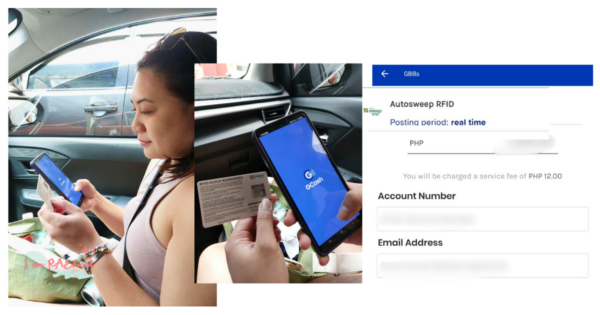
There was a time when I wondered why I couldn’t just use one for everything. But as life became busier, it clicked that my bank account and e-wallet each have different roles. My bank account is where I receive most of my professional income, keep my savings, and prepare for bigger financial goals. My e-wallet, meanwhile, makes everyday transactions effortless. Recently, I’ve even used it to top up our Autosweep RFID while we were already on the road. As the self-proclaimed passenger queen (pun intended!), I make sure our trips run as smoothly as possible while my husband does the driving. A few taps on my phone, and that’s one less thing to worry about during the trip. It’s these little conveniences that make having an e-wallet so useful in everyday life.
Why I Keep Both a Bank Account and an E-Wallet
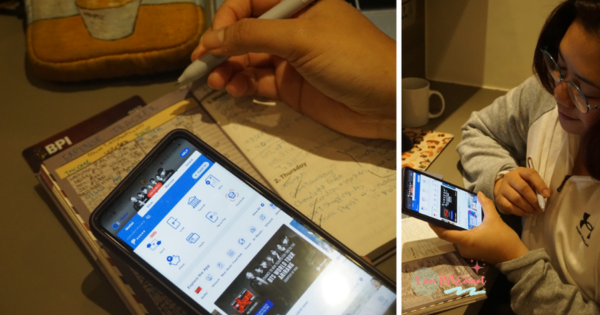
The more I learned, the more I appreciated that banks and e-wallets are built differently because they solve different problems. Banks support a broad range of financial services; from savings and loans to investments and business banking which allows them to sometimes offer perks like free fund transfers. E-wallets such as GCASH, on the other hand, focus on making digital payments fast, accessible, and convenient. Their core business revolves around processing transactions, helping millions of Filipinos pay, send, and receive money with ease. Rather than asking which one is better, I’ve come to see how they complement one another in supporting everyday financial needs.
Every Peso Tells a Story
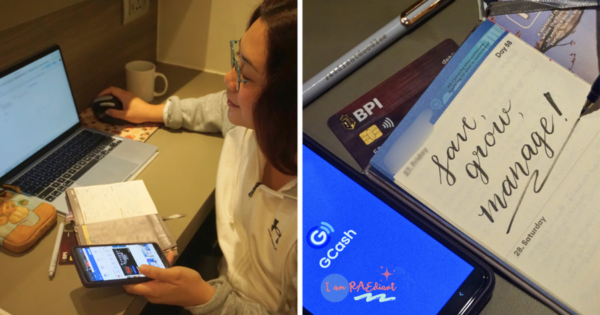
These days, when I update my expense tracker in my bullet journal, I’m no longer thinking about whether I used my bank account or my e-wallet. I’m thinking about whether my spending reflects the life I’m intentionally building. That’s probably my favorite part of journaling. It reminds me that every expense tells a story about what I value. The reality is that both banks and e-wallets help keep our digital economy moving. One helps us save, grow, and manage bigger financial goals, while the other makes daily transactions quicker and more convenient. For me, the smartest financial habit is knowing how to let both work together (bank and e-wallet), so I can spend with intention, save with confidence, and continue building a life that feels meaningful one journal entry at a time.